



Red Yeast Rice Pigment vs Anthocyanins: Which Natural Red Colorant Is More Stable?
Compared to anthocyanins, Red Yeast Rice Pigment is more stable for commercial applications. This Monascus-based colourant, produced by controlled fermentation, retains its brilliant colour even after extended exposure to temperatures over 120°C. Red Yeast Rice Pigment is preferred for meat processing, seasoning products, and supplement formulations where stability affects product quality and consumer acceptance because it maintains colouration across a pH range of 3.0 to 10.0, unlike anthocyanins, which degrade rapidly under thermal stress and pH fluctuations.
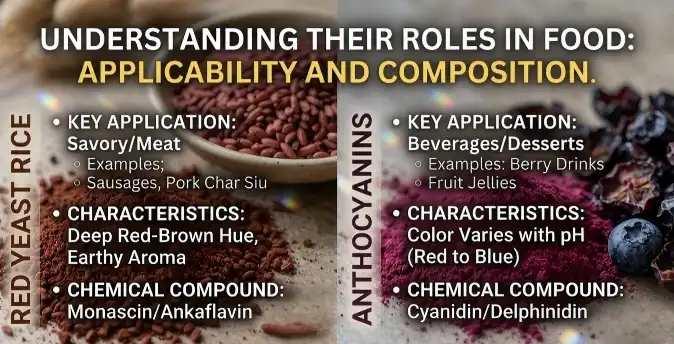
Understanding Red Yeast Rice Pigment and Anthocyanins
Origins and Chemical Composition
Controlled Monascus purpureus fermentation of non-glutinous rice produces red yeast rice pigment. Azaphilone derivatives and polyketides form a complicated mixture. This fermentation-derived colourant contains bioactive compounds including monascorubrin and rubropunctatin that help it colour and do other things. To maximise plant pigment while minimising chemicals, manufacturing conditions are monitored. This produces a conventional product with 1,000–4,000 colour units per gram of tinctorial strength.
Red cabbage, berries, and other coloured plant parts contain anthocyanins, a broad category of water-soluble flavonoid glycosides. Their molecular structure varies per plant, including sugar moieties and acylation patterns that impact stability. Extraction techniques employ aqueous or alcoholic solvents, concentration, and purification to produce industrial-grade anthocyanin powders or liquid solutions.
Functional Properties Beyond Color
Both colours do more than look fantastic. During fermentation, red yeast rice pigment produces polyphenolic chemicals that prevent lipid oxidation in food matrixes. These chemicals also preserve naturally. Research has indicated that Bacillus subtilis and Staphylococcus aureus have modest antibacterial properties. These advantages are secondary to its colourant function. Due to fermentation, Red Yeast Rice Pigments offer distinct flavours that complement savoury dishes. Umami enhances the flavour of meat and spice combinations.
Anthocyanins are potent radical-removal antioxidants. This protects items from oxidation. They have spurred interest in functional beverages and nutrition that combine colour with health advantages because they are healthy. However, their bioactivity renders them susceptible to environmental conditions, making them less suitable in difficult manufacturing situations when processing pressures exceed typical formulation procedures.
Stability Factors Affecting Red Yeast Rice Pigment and Anthocyanins
Thermal Stability Performance
Red Yeast Rice Pigment is heat-resistant, unlike most natural red colourants. Industrial testing demonstrate that even after prolonged 120°C or greater heating, the hue doesn't alter. It works in retorting, baking, extrusion, and other high-temperature operations. Azaphilone's chemical structure makes it heat-resistant. The producers believe this hue is stable despite boiling, pasteurisation, and sterilisation that would bleach anthocyanin-based alternatives when we ship it to meat processors.
Anthocyanins degrade quickly at 70°C, indicating heat sensitivity. Heat breaks down their glycosidic linkages and hydroxyl groups, reacting with water. This fades the hue into brown or colourless trash. Because of reason, anthocyanin can only be utilised in barely processed, cold, or mildly heated foods. This eliminates many large-scale production possibilities.
pH Sensitivity and Range
These natural reds stand out for their pH stability. Red Yeast Rice Pigment is consistent in neutral, slightly acidic, and slightly alkaline situations from pH 3.0 to 10.0. Formulators may adapt to many product kinds without using buffer systems or pH modification techniques because to this broad pH range. We found that Red Yeast Rice Pigments remain purple-red in meat marinades (pH 5.5), neutral beverages (pH 7.0), and alkaline noodle doughs (pH 8.5).
Because of their flavylium cation structure, anthocyanins change colour considerably across pH. If the pH is below 3.5, they become bright red; between 5 and 7, they turn purple or violet; and beyond 8, they turn blue or green and break down swiftly. This colour behaviour relies on pH, making it difficult to create since you must carefully manage pH and employ acidic conditions that may not work with other product demands. Food and supplement uses for anthocyanins are limited since they lose colour at neutral and alkaline pH.
Comparative Advantages: Red Yeast Rice Pigment vs Anthocyanins
Color Intensity and Application Range
The colour and tinctorial strength of Red Yeast Rice Pigment make ingredient dosage cheaper. Foods like beef, surimi, spice blends, and vitamin pills benefit from the deep purple-red tint. The pigment covers and distributes uniformly in meat applications without streaks or uneven colouring like water-soluble alternatives because it clings to protein matrixes. This colourant works well in sausages, gammon, spice mixes, and extruded snacks, when less stable choices would have broken down. We sold to 30 nations.
Based on pH and source, anthocyanins are red, purple, or blue. This colour is ideal for formulators who want to use it in drinks, desserts, and dairy products with delicate structures. For health-conscious consumers, "fruit-derived" is clean and appealing. The required colour intensity requires higher dosage rates than with more concentrated alternatives, making large-scale manufacture less cost-effective.
Regulatory Status and Safety Considerations
The US, EU, and Asia-Pacific allow Red Yeast Rice Pigment as a food ingredient in regulated circumstances that meet safety standards. The major regulator is citrinin. If controls fail, fermentation may create this metabolite. We must keep citrinin below 100 ppb for EU compliance and 2 ppm for broad markets. The HPLC verifies this. Certificates of Analysis for all batches show heavy metal levels (Lead <2 mg/kg, Arsenic <3 mg/kg), microbiological absence, and pigment content quantified by spectrophotometry at 505nm
Natural food colourings like anthocyanins from popular foods are allowed. Labelling and compliance are straightforward with their US GRAS and European E163 certification. The lack of any safety issues beyond source material allergies makes documentation straightforward. Because of this regulatory benefit, anthocyanins are acceptable for organic or clean label products if their stability issues can be addressed.
Selecting the Right Natural Red Colorant for Your Business Needs
Matching Pigments to Application Requirements
Product designers must weigh reliability and manufacturing conditions while choosing colours. Red Yeast Rice Pigment works best when heated above 80°C, kept cold and dry for over 12 months, and combined with clingy protein-rich materials. Capsule, powder, dry spice mix, and functional food manufacturers who extrude or bake should utilise this Monascus-based alternative.
Anthocyanins work well in acidic drinks (below pH 4.0), minimally processed fruit-derived foods, cosmetics that use colour variation creatively, and cold foods. Since buyers worry more about where materials come from than how well they function, natural marketing benefits organic and wellness enterprises. Anthocyanins have difficulties, but beverage companies that utilise cold-fill processes and keep their products in refrigeration may use them provided the packaging keeps light out and the items move quickly via retail channels.
Certification and Compliance Standards
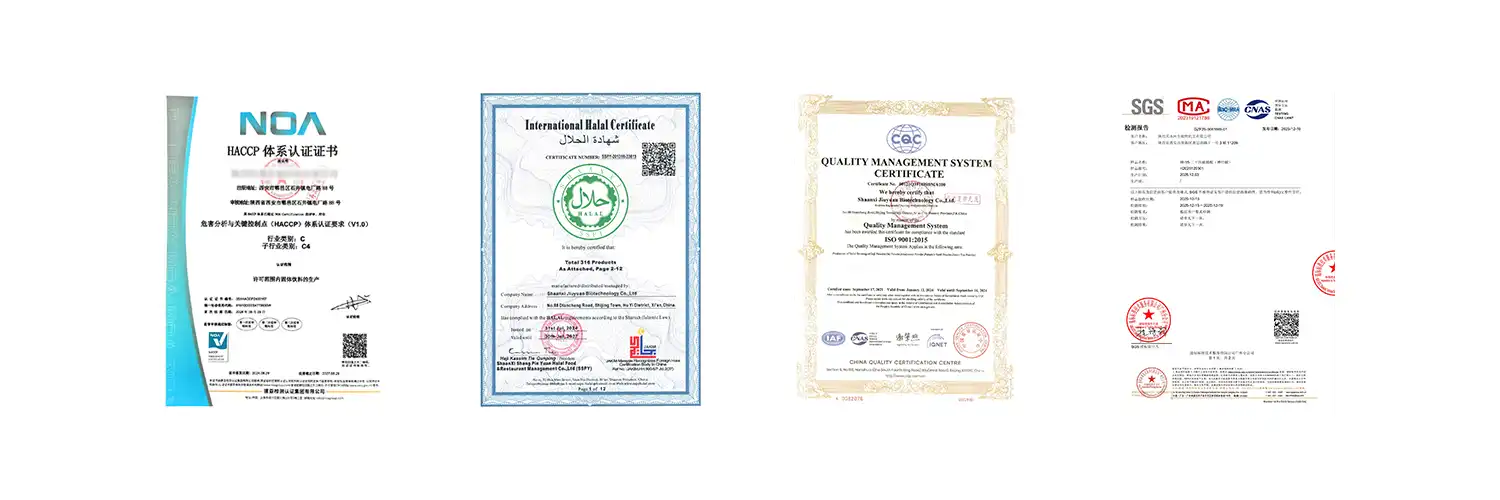
Procurement managers should prefer well-documented suppliers for regulatory compliance in all target markets. Our ISO9001 Quality Management, GMP, FDA, Kosher, and Halal-certified Red Yeast Rice Pigment is suitable for numerous culinary applications. Colour, HPLC citrinin, ICP-MS heavy metal, and Salmonella and E. coli microbiological tests are done by approved labs.
Red Yeast Rice Pigments entering European markets must be citrinin-free due to 50 ppb or fewer measurement requirements. We prevent citrinin formation by selecting strains, optimising substrates, and managing the environment during fermentation. This proactive strategy creates safer goods and eliminates processes that might lower pigment quality or production. Buyers should request batch-specific Certificates of Analysis instead than general specification sheets. Thus, purchasers can ensure all shipments fulfil established criteria.
Practical Usage Guidelines and Best Practices
Incorporation Techniques and Dosage
Red Yeast Rice Pigment must be dissolved and mixed well for optimal effects. Because it dissolves quickly in water and ethanol, liquid ingredients may be combined with the powder before adding it to the combination. The dose should be 0.01% to 0.5%, depending on colour intensity and application. For instance, meat needs 0.1 to 0.3% and vitamins 0.05 to 0.2%. To avoid colour stains in dry spice mixes, combine ingredients thoroughly.
The pigment dissolves and stabilises depending on inclusion temperature. Although Red Yeast Rice Pigments can tolerate processing heat, dissolving powder in moderately warm (40–60°C) water speeds up the procedure. Don't apply colour at high processing temperature. Try adding it while the mixture is cooling or with room-temperature ingredients that will be cooked. The pigment's excellent heat resistance is used during processing while maintaining the color's intensity.
Storage and Handling Protocols
The right storage methods improve pigment shelf life and preserve specifications throughout inventory cycles. Cool, dry, out-of-direct-sun regions with temperatures below 25°C and relative humidity below 60% should store Red Yeast Rice Pigment. Our 10 kilogram drum packaging protects well, but tight-capped containers for smaller volumes avoid air and moisture exposure. In tropical areas where stability may be difficult, vacuum-sealed or nitrogen-flushed packaging protects storage longer than 18 months.
Inventory movement techniques should drain older stock before utilising new orders. Our Red Yeast Rice Pigment lasts 24 months under the right conditions, although using materials made within 12 to 18 months of each other improves colour performance and prevents degradation. Check storage conditions and quality regularly to ensure colour uniformity, no clumps, unpleasant odours or other damage.
Conclusion
In all key industrial colourant performance criteria, Red Yeast Rice Pigment is more stable than anthocyanins. Supplement producers, meat processors, and food industries that deal in harsh conditions utilise it as a natural red colourant since it can endure high temperatures, a broad pH range, and a long shelf life. Anthocyanins may assist with marketing since they originate from fruits, but they are inherently unstable, making it hard to produce goods and causing quality issues that make consumers unsatisfied.
Red Yeast Rice Pigments offer technological advantages beyond colour retention. They are antioxidants, moderately destroy bacteria, and bind to proteins to increase application performance. Red Yeast Rice Pigment may provide cost-effective clean-label solutions without sacrificing company stability by dealing with reliable vendors that offer certified quality, clear documentation, and fast technical assistance.
FAQ
1. Are there any known side effects of using Red Yeast Rice Pigment in food products?
Red Yeast Rice Pigment is safe when manufactured in a citrinin-controlled setting. The most significant thing is monitoring monacolin K levels, which decrease cholesterol but are regulated in certain regions. Colourants should employ strains and fermentation procedures that minimise monacolin generation. Before completing formulas, review target market safety data sheets and regulatory requirements. Red Yeast Rice Pigments are safe at regular colourant dosages when manufactured according to international standards.
2. How does the antioxidant capacity of Red Yeast Rice Pigment compare to anthocyanins?
Both colourants have distinct antioxidant effects. Anthocyanins contain more hydroxyl groups and flavonoid structures, therefore they scavenge more radicals in DPPH and ORAC assays. However, Red Yeast Rice Pigment contains beneficial compounds including monascorubrin and fermentation flavonoids that improve heart health and inhibit fat breakdown. How much antioxidant is utilised, how the matrix interacts, and how the formulation is handled may affect how effective the antioxidant is. Both provide advantages beyond hue, so don't select solely on antioxidants alone.
3. What certifications should I look for when purchasing Red Yeast Rice Pigment in bulk?
ISO9001 for quality management, HACCP for food safety, GMP for production, and organic verification for product positioning are significant certifications. FDA registration demonstrates compliance and EFSA alignment shows Europe's readiness for US market access. People with dietary restrictions purchase more with Kosher and Halal permits. Ask for batch-specific testing, such as HPLC citrininin confirmation, ICP-MS heavy metal analysis, microbiological pathogen testing, and spectrophotometric colour value determination, in addition to system approvals. A third-party lab from an accredited institution may independently verify quality claims.
Partner with HERBCOSHER for Premium Red Yeast Rice Pigment Supply
High-stability Monascus red colourants from HERBCOSHER are designed for nutraceutical, food processing, and cosmetic applications. Our Red Yeast Rice Pigment is ISO9001, GMP, FDA registered, Kosher, and Halal certified and offers excellent heat resistance, pH tolerance, and colour consistency. As an experienced Red Yeast Rice Pigment producer with 20 years of natural extract knowledge and university research connections, we give technical help throughout product development to ensure formulation success.
Contact our technical sales team at info@herbcosher.com to request samples, discuss your specific stability requirements, or receive customized quotations for your next production run. Whether you're a supplement brand seeking vibrant capsule colors, a meat processor requiring heat-stable natural colorants, or a contract manufacturer developing client formulations, HERBCOSHER delivers the quality, reliability, and technical partnership supporting your success in competitive markets.
References
1. Chen, F., & Hu, X. (2005). Study on red fermented rice with high concentration of monacolin K and low concentration of citrinin. International Journal of Food Microbiology, 103(3), 331-337.
2. Patras, A., Brunton, N. P., O'Donnell, C., & Tiwari, B. K. (2010). Effect of thermal processing on anthocyanin stability in foods; mechanisms and kinetics of degradation. Trends in Food Science & Technology, 21(1), 3-11.
3. Shi, Y. C., & Pan, T. M. (2011). Beneficial effects of Monascus purpureus NTU 568-fermented products: A review. Applied Microbiology and Biotechnology, 90(4), 1207-1217.
4. Sigurdson, G. T., Tang, P., & Giusti, M. M. (2017). Natural colorants: Food colorants from natural sources. Annual Review of Food Science and Technology, 8, 261-280.
5. Wrolstad, R. E., & Culver, C. A. (2012). Alternatives to those artificial FD&C food colorants. Annual Review of Food Science and Technology, 3, 59-77.
6. Zhou, W., Guo, R., Guo, W., Hong, J., Li, L., Ni, L., & Sun, J. (2019). Monascus yellow, red and orange pigments from Monascus purpureus: Production, composition, food application and health benefits. Food Research International, 124, 44-53.