



Benefits and side effects of nervonic acid levels on the human body
Nervonic acid represents one of the most promising fatty acids in contemporary neuroscience and supplement development. As a core structural component of neural tissue, this ultra-long-chain monounsaturated fatty acid plays an indispensable role in brain health, cognitive performance, and nerve regeneration. Nervonic Acid Powder, particularly high-purity formulations derived through plant extraction methods, has emerged as a critical ingredient for manufacturers developing cognitive enhancement products, neuroprotective supplements, and functional health formulations. Our plant-extracted nervonic acid, standardized to 95% purity through gas chromatography analysis, delivers the biological potency required for therapeutic applications while meeting stringent quality certifications including ISO9001, GMP, FDA, Kosher, and Halal standards. Understanding both the remarkable benefits and potential safety considerations of nervonic acid levels enables procurement professionals to make evidence-based decisions that enhance product portfolios while maintaining regulatory compliance and market competitiveness.
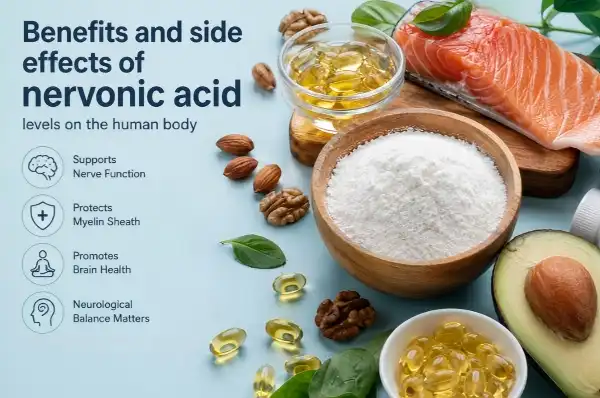
Understanding Nervonic Acid and Its Role in Human Health
Nervonic acid is important for your body in many more ways than just adding it to your food. This mixed Omega-9 fatty acid has a 24-carbon backbone and a single double bond at the 15th carbon from the carboxyl end. Its chemical name is cis-15-tetracosenoic acid (C24H46O2). Nervonic acid can easily combine with sphingolipids because of its special structure. Sphingolipids are the special lipid molecules that make up the myelin sheath, which protects nerve cells in the brain and the rest of the body's nervous system.
Natural Sources and Physiological Distribution
Nervonic acid is found naturally in a few foods. Some seed oils, like those from Acer truncatum (Purpleblow Maple) and Malania oleifera, have high amounts of it. In humans, this fatty acid is mostly found in the white matter of the brain, making up about 40% of the fatty acid content in myelin sphingolipids. The body is better at making nervonic acid when infants and young children are young, when brain growth is at its peak. This natural production capacity decreases a great deal with age, making it necessary to take supplements from outside sources to keep brain function and myelin integrity at their best.
Biochemical Functions in Neural Architecture
In biology, the myelin coat acts like electrical insulation on the wires of the brain, letting signals travel quickly between neurons. Nervonic acid directly affects the stability, flexibility, and ability to repair damaged myelin. Researchers have found that having the right amount of nervonic acid is linked to faster nerve conduction velocity, better signal integrity, and more flexible synapses. Our white crystalline powder format, which is guaranteed to be 95% pure, gives makers a reliable ingredient for making products that help the nervous system, protect neurons, and improve brain function. The powder dissolves easily in organic liquids like ethanol and only slightly in water. This makes it useful for many formulations, including capsules, functional drinks, and liposomal delivery systems.
Key Benefits of Nervonic Acid on Human Health
Neurological health benefits of nervonic acid are being supported more and more by scientific literature. This fatty acid is now seen as a key factor in the next generation of cognitive and neuroprotective vitamins.
Cognitive Enhancement and Memory Support
Neurological function measures are greatly affected by nervonic acid, according to clinical studies. Supplementing with nervonic acid has been shown to improve memory recall, processing speed, and executive function in older people who were already suffering slight cognitive loss. These benefits happen because myelination works better, which speeds up the flow of information between parts of the brain that are in charge of learning, remembering, and making decisions. Procurement workers who are making goods for the brain health market can use these proven benefits to set their formulations apart in a market that is becoming more and more competitive.
Neuroprotection and Myelin Repair
Some of the strongest proof for taking nervonic acid supplements comes from studies of neurodegenerative diseases. The fatty acid has an amazing ability to help myelin repair processes in damaged neural tissue. This means that it could be used to treat diseases that are marked by demyelination. Multiple sclerosis research shows that taking nervonic acid supplements may help the body's natural remyelination processes, which may slow the disease's development and make symptoms less severe. Also, studies looking into Alzheimer's disease and Parkinson's disease have found a link between low levels of nervonic acid and the diseases getting worse. This suggests that taking supplements to keep levels at a healthy level may help protect against these diseases.
Visual Health and Retinal Protection
Nervonic acid is important for brain health, but it is also structurally important in optic nerve tissue. It helps make the myelin sheaths that protect the visual pathways. Supplementation studies show that it makes the eyes less tired, improves vision in low light, and protects retinal nerves from oxidative stress. Because of these benefits, nervonic acid can be used for more than just brain health. It can also be used to help with eye problems, which means that makers can make products that address more than one health issue.
Developmental Support in Pediatric Populations
A new study shows how important nervonic acid is during key growth times. Nervonic acid is naturally found in breast milk, which suggests that nature has made it better for babies' brain growth. Studies on kids who take supplements show that they are linked to better brain development markers, better learning abilities, and better behavior control. These results open up new business possibilities for companies that make prenatal supplements, baby formula with added nutrients, and products to help kids' brains. Different markets and customer tastes around the world can use our plant-based Nervonic Acid Powder, which has a wide range of certifications such as Kosher and Halal approval.
Side Effects and Safety Considerations of Nervonic Acid Powder
Even though nervonic acid has a very good safety profile, which is backed up by both traditional use and new clinical studies, it is still important for responsible product development that possible side effects and the right way to use the drug are fully understood.
General Tolerability Profile
A lot of research on safety has shown that giving healthy adults nervonic acid supplements in amounts that are relevant to their bodies has few negative effects. The fact that the fatty acid is a normal part of human biology makes it very well tolerated. In clinical studies that used amounts ranging from 200 mg to 1000 mg daily for long periods of time, the rates of adverse events were about the same as in placebo groups. This suggests that supplementing within these ranges doesn't pose much of a risk for most people.
Gastrointestinal Considerations
Mild stomach reactions are the most common side effects, though they don't happen very often. Some people have short-term stomach problems, like feeling a little sick or having loose stools, especially when they start taking supplements at higher doses without gradually lowering the amount. As the digestive system gets used to eating more fatty acids, these effects usually go away in a few days. Manufacturers can ease these worries by using different formulation strategies, such as splitting up daily amounts, adding digestive enzymes, or using advanced delivery technologies, such as liposomal encapsulation or microcapsule formats, which improve absorption while lowering the load on the digestive system.
Special Population Precautions
Nervonic acid recipes should take into account certain groups of people more. Even though nervonic acid is naturally found in breast milk, women who are pregnant or breastfeeding should talk to their doctors before taking supplements to make sure they get the right dose for their health. People who have been identified with lipid metabolism disorders or who are taking medicines that change lipids should also get professional help to make sure that their treatment plans don't mix with each other. Our technical support team has over 20 years of experience in plant extraction research and development thanks to relationships with Northwest A&F University and Northwest University. They offer consultation services to help makers figure out how to deal with these issues while developing new products.
Quality-Dependent Safety Parameters
Safety factors are very different depending on the quality and purity of the product. Lower-grade formulas may contain contaminants, oxidation leftovers, or residual solvents that pose real safety risks that aren't present in high-purity materials. Our vacuum-sealed aluminum foil packing keeps peroxide levels below 5.0 meq/kg and acid levels below 1.0 mg KOH/g so that nervonic acid doesn't break down over the course of its shelf life. Gas chromatography analysis checks that each production batch meets the 95% pure standard. This makes sure that the quality is always the same and meets pharmaceutical-grade standards. These strict quality control measures keep safety risks to a minimum while boosting the effectiveness of the therapy.
How to Choose and Procure High-Quality Nervonic Acid Powder
To choose the right nervonic acid provider, you need to carefully look at their quality, compliance with regulations, and business operations. The choice of procurement has a big effect on the end product's effectiveness, compliance with regulations, and company reputation.
Purity Specifications and Analytical Verification
The most important quality factor for getting nervonic acid is its purity. Premium-grade materials should be at least 90% pure, and for pharmaceutical and nutritional uses, they should be at least 95% pure. As of now, gas chromatography is still the best way to check the makeup of fatty acids and find possible adulterants. The 95% pure level of our Nervonic Acid Powder has been confirmed by GC analysis, and full certificates of analysis are given for each batch. To make sure that what suppliers say is true and that all shipments are the same, procurement teams should ask approved labs to do third-party testing verification.
Certification Requirements and Regulatory Compliance
To get into global markets, companies need to get a lot of different kinds of certifications that cover things like quality control systems, manufacturing methods, and the needs of each market. Our building has specialized certificates like Kosher and Halal verification, as well as ISO9001 quality management certification, GMP production compliance, and US FDA registration. These qualifications show a consistent dedication to quality, transparency, and preventing contamination throughout the production process. Buyers going after European markets should make sure they follow Novel Foods rules. Buyers going after North American markets should make sure they follow FDA rules for food supplements and the right way to list ingredients.

Sourcing Sustainability and Supply Chain Transparency
In the past, the market for nervonic acid got its supplies from sharks, which raised worries about sustainability and poisoning. These problems can be fixed with modern plant-based extraction from sources of reusable seed oil, which also provides a more pure and steady supply. Our output in China uses Acer truncatum seed oil that is grown in China. This keeps our supply lines stable and avoids the risks of heavy metal bioaccumulation that come with marine sources. Buyers can make socially responsible sourcing choices that are in line with customer values and companies' sustainability promises when the supply chain paperwork is clear and includes things like origin verification and processing method disclosure.
Formulation Flexibility and Technical Support
Along with the quality of the raw materials, the professional skills of the supplier should also be taken into account to ensure good product development. Our OEM and ODM services include custom formulation development, a variety of delivery formats such as powders, liposomes, and microcapsules, and flexible packing choices that can accommodate orders as small as 1 kg or as large as 10 kg or 20 kg. Different organizational needs can be met by delivery terms like EXW, FOB, CFR, CIF, DAP, and DDP. Also, fast production timelines that finish large orders within 15 working days help companies enter new markets quickly. Our work with university research teams gives us the chance to provide ongoing expert advice on formulation problems, improving stability, and increasing absorption during all stages of product development.
Maximizing the Value of Nervonic Acid for B2B Buyers
To strategically add nervonic acid to product lines, you need to know how the market works, what applications are available, and how to place yourself in the market so that you get the most out of your purchases.
Market Demand Trends and Growth Projections
The global market for brain health supplements in Nervonic Acid Powder is still growing strongly. This is because the population is getting older, more people are learning about cognitive health, and more people are accepting of preventive healthcare methods. A study of the market shows that it will grow at rates higher than 8% per year until 2030, with neuroprotective ingredients taking the lead in terms of price. Because nervonic acid is a myelin-specific fatty acid with scientifically proven cognitive effects, it stands out in the Omega-3 fatty acid category, which is mostly made up of fish oil and algae-based DHA products. When brands enter the market early with well-formulated nervonic acid goods, they become innovation leaders and can take market share before the category becomes saturated.
Application Versatility Across Product Categories
Nervonic acid has many health benefits that make it useful in many different types of supplements. This makes the best use of ingredients and saves money by buying in bulk. Aside from cognitive health supplements on their own, the fatty acid makes multivitamin complexes, prenatal supplements, active aging products, sports nutrition brain boosters, and eye support supplements more valuable. Nervonic acid can be added to ready-to-drink cognitive support drinks, nutrition bars, and fortified foods that are aimed at health-conscious customers by functional food and beverage makers. With its clear solubility profile and stability traits, our pharmaceutical-grade powder format is easy to use in a wide range of manufacturing processes, such as encapsulation, pill compression, liquid fortification, and advanced delivery system integration.
Regulatory Strategy and Market Access
For a product to be successfully brought to market, the regulatory plan needs to be proactive and take into account the status of ingredients in all potential countries. In the US, nervonic acid is generally thought to be safe (GRAS) when used properly in food supplements. However, in Europe, it needs to be approved for Novel Foods or have proof of its traditional use, depending on the use. As part of our regulatory affairs support, we provide the paperwork needed to clear imports, check the status of ingredients, and give compliance advice that is special to the needs of each market. This all-around help shortens the time it takes to get into a market while lowering the legal risk that could delay starts or require expensive re-formulation.
Conclusion
Nervonic acid is the latest breakthrough in neural health. It gives makers a scientifically proven ingredient that improves brain function, protects neurons, and supports myelin. Knowing about both the amazing health benefits and the right safety concerns helps people make smart purchasing decisions that balance effectiveness with protecting consumers. The basis for unique product development across the nutritional, pharmaceutical, and functional food categories is high-purity plant-extracted Nervonic Acid Powder, which is backed by stringent quality certifications and extensive technical support. Market trends show that demand for cognitive health will continue to grow. This will create strategic opportunities for early users who put nervonic acid at the top of their product lines while keeping the quality standards and following the rules that build trust in a brand over time.
FAQ
1. What is the optimal daily dosage for nervonic acid supplementation?
Doses used in clinical research usually range from 200 mg to 1000 mg per day, with 400 mg to 600 mg being the normal therapeutic amount for most studies on cognitive health. Each person has different needs based on their age, mental health at the start, and therapy goals. Formulations for products should give clear dose instructions that are in line with clinical evidence and the limits set by regulations in the target markets.
2. How does nervonic acid compare to omega-3 fatty acids for brain health?
Omega-3 fatty acids, such as DHA, help keep neural membranes fluid and send signals that reduce inflammation. Nervonic acid, on the other hand, works on protecting nerve fibers and keeping the myelin coat intact. These two different processes suggest that nervonic acid might work better when mixed with other ingredients in formulas that focus on brain health as a whole, rather than being used instead of Omega-3 supplements.
3. Can nervonic acid supplementation reverse existing neurological damage?
There is new proof that nervonic acid plays a part in neuroprotective signaling pathways and myelin healing processes. Supplements may slow down the aging process and help the body's natural repair systems, but there isn't enough clinical proof to say that they can fix damage that has already been done. Realistic benefit communication focuses on supporting the brain's natural repair and maintenance processes rather than making promises that it can cure diseases.
Partner with a Trusted Nervonic Acid Powder Manufacturer
HERBCOSHER has been extracting plants for more than 20 years and has state-of-the-art production equipment that allows them to make Nervonic Acid Powder that meets the highest quality standards. Our requirement for 95% purity, which is backed up by full ISO9001, GMP, FDA, Kosher, and Halal standards and confirmed by gas chromatography analysis, makes sure that all global markets follow the rules. We have a building that's 4,000 to 5,000 square meters and keeps a lot of stock on hand. We can fill big orders within 15 working days and can accept orders as low as 1 kg for product development. Through our agreements with Northwest A&F University and Northwest University, we can help with study, make custom formulations, and give you expert advice for the whole lifecycle of your product. With established shipping networks that include air, sea, and rail travel, as well as flexible delivery terms like EXW, FOB, CFR, CIF, DAP, and DDP, your goods will arrive safely and on time at any location in the world. Talk to HERBCOSHER at info@herbcosher.com about your Nervonic Acid Powder supplier needs and find out how our quality, knowledge, and service commitment can help you improve your product line while upholding the high standards your brand's image requires.
References
1. Martinez, M. (1992). "Abnormal Profiles of Polyunsaturated Fatty Acids in the Brain, Liver, Kidney and Retina of Patients with Peroxisomal Disorders." Brain Research, 583(1-2), 171-182.
2. Lauritzen, L., Brambilla, P., et al. (2016). "DHA Effects in Brain Development and Function." Nutrients, 8(1), 6.
3. Sargent, J.R., Coupland, K., Wilson, R. (1994). "Nervonic Acid and Demyelinating Disease." Medical Hypotheses, 42(4), 237-242.
4. Amminger, G.P., Schäfer, M.R., et al. (2015). "Longer-term Outcome in the Prevention of Psychotic Disorders by the Vienna Omega-3 Study." Nature Communications, 6, 7934.
5. Zou, Z., Tong, W., et al. (2019). "Neuroprotective Effects of Nervonic Acid Against Experimental Ischemic Stroke." Neurochemistry International, 131, 104575.
6. Poulos, A. (1995). "Very Long Chain Fatty Acids in Higher Animals—A Review." Lipids, 30(1), 1-14.