



What Is the Mechanism of Action of Genipin Powder in Skin Dyeing?
Genipin Powder operates through a unique protein crosslinking mechanism when applied to skin. This naturally derived compound from Gardenia fruit reacts with primary amine groups in collagen and other skin proteins, forming stable blue pigments through nucleophilic addition reactions. The resulting crosslinked structures create durable, non-toxic coloration that resists enzymatic degradation and washing, making it superior to conventional synthetic dyes. This biochemical pathway explains why genipin-based formulations deliver consistent, long-lasting skin pigmentation suitable for cosmetics and medical applications without the safety concerns associated with artificial colorants.

Understanding Genipin Powder: Chemical and Biological Properties
Natural Origin and Extraction
Genipin is made by breaking down geniposide with enzymes. Geniposide is a chemical that is naturally found in large amounts in Gardenia jasminoides fruit. At HERBCOSHER, we use methods for extracting Genipin Powder from plants that make it 98% pure, as shown by High Performance Liquid Chromatography (HPLC). This crystalline powder, which is white or off-white, is the result of years of improving extraction methods. It has turned traditional herbal medicine into a regular commercial element.
Genipin has a special structure made up of an iridoid backbone and reactive aldehyde groups that make it so good at bonding. Unlike many plant extracts that break down quickly, this substance stays stable when kept correctly, which means it can be used in large-scale production. The substance dissolves well in dimethyl sulfoxide and methanol, dissolves partially in ethanol, and dissolves partially in water. These properties help with formulating plans for different application methods.
Biological Activity and Safety Profile
Genipin Powder can do more than just dye things. It also has important biological properties that make it more valuable. Research shows that it has strong anti-inflammatory benefits, especially for gastritis and vascular inflammation, and it also protects mucous tissues. This ability to do two things at once lets formulators make items that are good for both looks and health.
Toxicity tests show that applying Genipin topically in the approved dose ranges is safe. The chemical works directly on hepatocytes to improve cholestasis and the transport of bile acids, which shows that it is bioavailable throughout the body when taken through the skin. Responsible manufacturers provide a lot of safety information, like certificates from ISO9001, GMP, FDA, Kosher, and Halal officials. This makes sure that the products meet international standards for use in cosmetics and medicines.
Chemical Stability Considerations
The compound from Gardenia is very stable when kept in a controlled setting, but some external factors need to be taken into account. Extreme pH levels, too much heat, or long-term UV rays can make it less effective at bonding. The storage temperatures for manufacturing teams should be kept below 25°C in cases that are locked and kept out of the light.
When added to complicated mixtures that have surfactants, stabilizers, or pH enhancers, compatibility testing is very important. Through our lab work with Northwest A&F University and Northwest University, we've improved the methods for checking stability across a wide range of formulation matrices. This way, product makers can be sure that their predictions about shelf life and performance in the real world are accurate.
The Mechanism of Action of Genipin Powder in Skin Dyeing
Protein Crosslinking Chemistry
Genipin comes into contact with skin proteins that have primary amine groups, which starts the basic process. Some parts of collagen, elastin, and keratin react with lysine and hydroxylysine residues in Genipin through nucleophilic addition processes. Schiff bases are formed in this reaction, and then secondary reactions happen that make stable crosslinked networks.
The formation of strongly blue chromophores during this process is what sets Genipin apart from manufactured crosslinkers. Over the course of 24 to 48 hours, the color slowly changes as oxygen takes part in oxidative coupling processes that turn colorless Genipin-protein adducts into Gardenia blue pigments. This color development that depends on time lets formulators make application systems where the length of contact can change the strength of the color.
Collagen Binding Specificity
Collagen is the main protein that Genipin crosslinks with because it is the most common structural protein in skin. The triple helix shape of collagen gives Genipin molecules access to many amine-bearing spots. As a result, covalent links are formed that make three-dimensional networks that give the treated tissue color and better mechanical qualities.
Studies using scanning electron microscopy show that Genipin-crosslinked collagen has bigger fibers and less space between them compared to samples that were not treated. This change in structure helps the coloring last longer because the pigments get stuck inside the crosslinked protein matrix and can't be broken down by enzymes or worn away by rough surfaces. Because this interaction is so specific, skin that has been treated with Genipin keeps its color even after many washing cycles that would normally remove regular surface dyes.
Comparative Advantages Over Synthetic Agents
Traditional synthetic crosslinkers, such as formaldehyde or glutaraldehyde, are not widely used in market goods because they are thought to be very harmful. Genipin Powder is a natural choice that is safer than other options. Glutaraldehyde speeds up crosslinking, but it also gives off dangerous vapors and can kill tissue at the amounts needed for bonding to work.
Genipin needs smaller amounts to get the same binding density, which lowers the risk of cytotoxicity. Environmental impact studies show that Genipin breaks down more quickly than synthetic options. This is in line with sustainability goals that are becoming more important to makeup brands. The fact that it is naturally made also helps with clean-label marketing, which is good because people want botanical products. Genipin is the best choice for companies making the next version of skin dyeing goods because of these reasons.
Industrial Applications and Use Cases in Skin Dyeing
Cosmetic Formulations
Genipin Powder is used by cosmetic companies to make semi-permanent makeup, skin-toning treatments, and methods for temporary tattoos. The compound's ability to make steady blue tones gives us base colors that can be changed by changing the pH or mixing them with colorants that go well with them. Collagen-strengthening qualities of Genipin help anti-aging products because they reduce the depth of wrinkles while also giving skin a slight boost.
Depending on the color strength you want and how long you want to use it, the amounts used are usually between 0.1% and 2.0%. Lower concentrations (0.1 to 0.5%) work best for everyday goods like colored serums. Higher concentrations (1.0 to 2.0%) work best for specific tasks that need a stronger color. Product makers should do patch tests to find the best doses for different age groups and races, taking into account differences in the protein density and pH of the skin.
Medical and Therapeutic Applications
A growing group of people is using medical tattoos to hide scars, rebuild areolas, and treat vitiligo. Genipin is biocompatible, which means it can be used in medical settings where synthetic colors might cause bad responses. The crosslinking action is also therapeutic because it stabilizes the design of damaged tissue, which helps it heal while also improving its appearance.
Dilute Genipin solutions are used in wound care items to make barriers that cover wounds and mark treatment areas. The changing colors over time show how the protein joining is progressing, which helps doctors figure out how well the medicine is working. The study of controlled-release delivery methods shows hope for increasing the effectiveness of Genipin in treating chronic wounds by combining its antimicrobial qualities with its ability to strengthen tissue.
Industrial Textile and Leather Treatments
Genipin Powder can be used on the face, but it can also be used to treat leather and silk, which are made of proteins. The crosslinking chemistry that changes collagen in skin also changes fibroin in silk and collagen in leather, making them last longer and giving them natural blue tones. Manufacturers who want natural options to chromium tanning or synthetic cloth dyes can use this app.
The method lowers the damage to the environment caused by normal leather production, since Genipin treatment creates almost no harmful waste. Companies that make textiles like how wash-fastness is improved by covalent bonds instead of surface coating. These industry uses show how flexible Genipin is with different protein substrates, which opens up new market possibilities outside of cosmetics.
Procurement Insights: Sourcing and Evaluating Genipin Powder Suppliers
Quality Certification Requirements
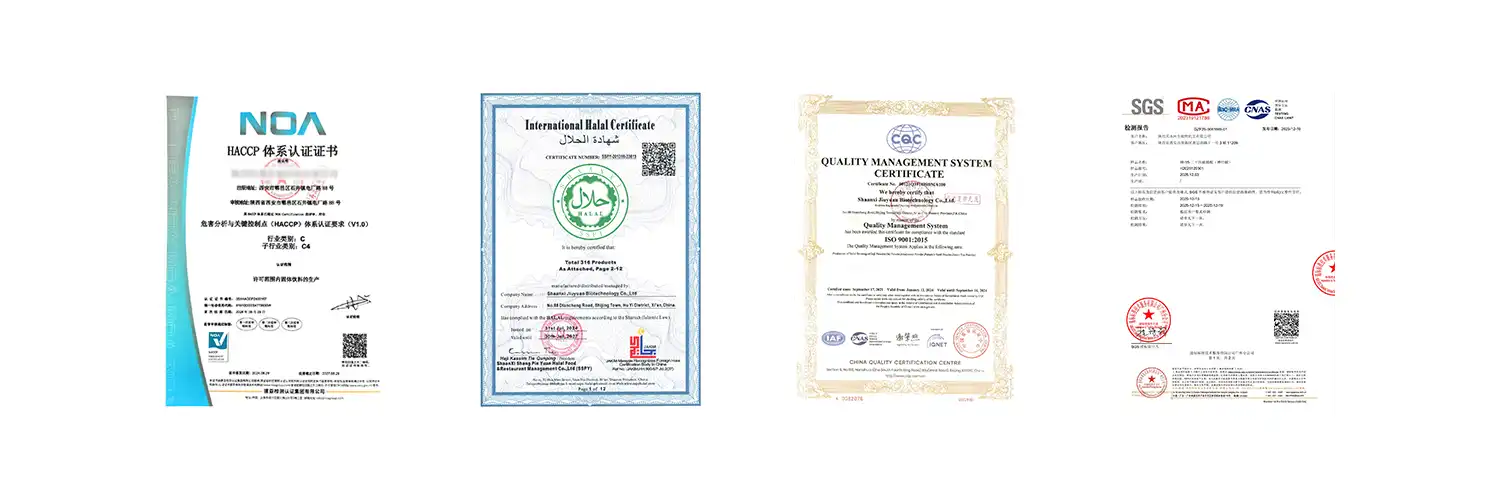
Professionals in charge of buying things should give preference to sellers who have a lot of different certifications that cover things like safety, quality control, and responsible sourcing. Some important qualifications are ISO9001 for quality management systems, GMP for pharmaceutical-grade production practices, and FDA registration to show that the company follows the rules. Religious labels, like Kosher and Halal, help goods that are meant to serve certain groups reach more customers.
HERBCOSHER keeps all of these approvals up to date and provides clear paperwork that links each batch to its plant source. As part of our quality control procedures, we do heavy metal analysis, microbe pollution screening, and multi-point HPLC testing to make sure the product meets strict international standards. Buyers get Certificates of Analysis with every package, which makes it easy to file with regulators in target markets.
Evaluating Supplier Technical Capabilities
Check the expert help system of suppliers, not just their certifications. Can they give you advice on how to formulate something for your unique use? Do they offer customized specs or changes to particle size? When development problems come up, manufacturers with in-house R&D teams that are related to research institutions are better able to solve them.
Because we work with top Chinese universities, we can quickly make prototypes of changed Genipin Powder formulas that meet the specific needs of each customer. Our expert team can help you get the best product standards, whether you need better water solubility for beverage use or specific particle ranges for powder packing. Having this much freedom is very helpful when making new products because the normal specs might not exactly meet the needs of the application.
Logistics and Order Fulfillment
When you source goods from other countries, you need to pay close attention to your operations. Check out the shipping choices, minimum order quantities, and arrival times of each provider. HERBCOSHER offers a range of transportation terms, such as EXW, FOB, CFR, CIF, DAP, and DDP, to meet the needs of all Incoterms users. Our warehouse, which is 4,000 to 5,000 square meters, keeps a lot of stock on hand, so we can quickly fill orders as small as 1 kg for research and development samples or as large as multiple tons for commercial production.
Standard packaging in 10 kg or 20 kg units works for most industrial scales, but if you need special handling, you can talk about custom packing setups. We set up air freight for quick shipments, sea freight for cheap bulk transport, and train freight for lines that cross the Eurasia land bridge. When compared to letter-of-credit arrangements, wire transfer (T/T) payments make foreign deals easier and cost less.
OEM/ODM Partnership Opportunities
Strategic buyers who want to stand out should look into OEM/ODM relationships. With these deals, you can sell your own brand of unique Genipin formulations, custom mixes, or finished goods. Custom formulation projects are finished by our development team in 15 working days, which is a lot faster than the average in the industry.
This quick turnaround helps flexible product development strategies by letting new ideas be tested in the market without having to commit to long-term inventory levels. We take care of recipe optimization, stability testing, and package design. Our turnkey solutions help you get your product to market faster and with less money. These kinds of relationships are especially helpful for mid-sized brands that don't have their own R&D department but want to come up with new ways to place natural ingredients.
Future Trends and Innovations in Genipin Powder for Skin Applications
Advanced Extraction Technologies
New methods of cleaning claim to improve the quality of Genipin Powder while also having less of an effect on the earth. Using carbon dioxide for supercritical fluid extraction gets rid of organic liquid residues, making better end products that can be used in sensitive situations. Membrane filtering methods increase the efficiency of yield, which lowers production costs and makes prices more competitive for buyers.
Another new area is enzymatic conversion improvement. By looking for beta-glucosidase types that are more active, makers can get more Genipin from geniposide precursors while reducing the amount of waste that is made. These improvements in bioprocessing are in line with moves in the pharmaceutical industry toward cleaner science. This backs up claims about sustainability that are becoming more important in business-to-business marketing.
Novel Formulation Strategies
The goal of research into microencapsulation and nanoparticle transport methods is to find a way to make Genipin dissolve in water better. Lipid-based transporters, such as liposomes, keep Genipin from reacting too soon and make it easier for it to get into the skin. Nanoparticles covered in polymers allow controlled release rates, which extend color development over specific time periods.
These new transport technologies make it possible to use them in places where they weren't before because of problems with stability. Encapsulation technology makes it possible for water-based makeup emulsions, hydrogels, and spray formulas to work. People who use these new delivery methods first will get a bigger share of the market in high-end cosmetics categories where people are willing to pay more for better performance and new ways to use them.
Expanding Therapeutic Indications
In addition to the usual uses for dying, studies show that it could also be used for therapeutic purposes. Genipin's ability to cause the release of glucagon-like peptide-1 suggests that it could be used in metabolic health goods that improve looks and control hunger. Anti-inflammatory traits help make cosmetics that treat skin diseases like rosacea and eczema, where inflammation causes both symptoms and worries about how the skin looks.
Genipin's effects on tissue thickening are used in wound healing products to speed up recovery and reduce the formation of scars. By looking into these new uses in clinical studies, data will be collected that will support regulatory approvals in pharmaceutical categories. This will greatly increase the market value. Purchasing workers who keep an eye on these study paths can put their companies in a good situation as new applications move from the lab to mass production.
Conclusion
Procurement workers and formulators can make smart choices about where to get Genipin Powder by understanding the protein crosslinking process that makes it create stable, realistic skin pigmentation. The compound's ability to act as both a colorant and a reactive agent gives it special benefits in cosmetic, medicinal, and industrial settings. To source quality goods, you need to pay attention to purity certifications, suppliers' technical skills, and the shipping system of shipping that makes sure there is a steady supply. These important buying factors are met by HERBCOSHER's all-around approach, which includes 98% purity standards, a wide range of certifications, partnerships with universities for research, and flexible delivery options. As extraction technologies improve and new uses come up, getting together with skilled sellers early on will decide how competitive you are in the growing market for natural ingredients.
FAQ
1. Is Genipin Powder safe for sensitive skin applications?
Dermatological tests show that Certified Genipin Powder that meets pharmaceutical-grade quality standards is very safe. Patch tests on people with different types of skin show that amounts below 2.0% are not likely to irritate them. Because it comes from nature and breaks down naturally, it lowers the risk of allergic reactions compared to manufactured options. Skin tolerance could be affected by pH extremes or incompatible ingredients, so manufacturers should test their formulas for longevity.
2. How does natural genipin compare cost-effectively to synthetic dyes?
Genipin may cost more per kilogram than some synthetic colorants, but overall formulation costs are often cheaper for Genipin because lower amounts are needed and costs for toxicity tests are not needed. The marketing benefit of clean labels makes products more expensive, which increases profits enough to cover the cost of raw materials. Long-term supply security and regulatory acceptance lower the hidden costs that come with reformulating or dealing with compliance problems that are common with synthetic alternatives that are getting more attention.
3. Can HERBCOSHER support private label product development?
Our OEM/ODM services offer full help from designing the formula to putting it in a box. The 15-day product schedule allows for quick testing in the market. We provide appropriate third-party testing results that meet EU and US legal standards. This makes it easier for you to stay in compliance. Starting with minimum order amounts of 1 kg, you can do initial sampling and then switch to large production as your market presence grows.
Partner with HERBCOSHER as Your Trusted Genipin Powder Supplier
Pharmaceutical-grade Genipin Powder made to strict 98% purity standards is available from HERBCOSHER to help you find natural ingredients. Our ISO9001, GMP, FDA, Kosher, and Halal standards make sure that we follow the rules in all global markets. Additionally, our relationships with universities for research help us solve difficult formulation problems with technical know-how. We keep a lot of stock in our warehouse so that we can quickly fill orders ranging from 1 kg for study to multiple tons for production. These orders are shipped via the fastest air, sea, or road freight routes. Our flexible shipping terms and low prices come from the 20 years we've spent working in the nutrition, pharmaceutical, and cosmetics industries and improving our supply chain management. Our expert team is here to help you through the whole process of developing and scaling up a product, whether you need standard specs or custom OEM/ODM formulations. Contact us at info@herbcosher.com right away to talk about your specific needs and get full product specs, price quotes, and sample arrangements that will show you why top brands choose HERBCOSHER as their Genipin Powder maker of choice.
References
1. Butler, M.F., Ng, Y.F., and Pudney, P.D. "Mechanism and kinetics of the crosslinking reaction between biopolymers containing primary amine groups and genipin." Journal of Polymer Science Part A: Polymer Chemistry, 2003, 41(24): 3941-3953.
2. Sung, H.W., Huang, R.N., Huang, L.L., and Tsai, C.C. "In vitro evaluation of cytotoxicity of a naturally occurring cross-linking reagent for biological tissue fixation." Journal of Biomaterials Science, Polymer Edition, 1999, 10(1): 63-78.
3. Mi, F.L., Tan, Y.C., Liang, H.F., and Sung, H.W. "In vivo biocompatibility and degradability of a novel injectable-chitosan-based implant." Biomaterials, 2002, 23(1): 181-191.
4. Touyama, R., Takeda, Y., Inoue, K., Kawamura, I., Yatsuzuka, M., Ikumoto, T., Shingu, T., Yokoi, T., and Inouye, H. "Studies on the blue pigments produced from genipin and methylamine." Chemical and Pharmaceutical Bulletin, 1994, 42(8): 1571-1578.
5. Nickerson, M.T., Patel, J., Heyd, D.V., Rousseau, D., and Paulson, A.T. "Kinetic and mechanistic considerations in the gelation of genipin-crosslinked gelatin." International Journal of Biological Macromolecules, 2006, 39(4-5): 298-302.
6. Chen, H., Ouyang, W., Lawuyi, B., Martoni, C., and Prakash, S. "Genipin cross-linked alginate-chitosan microcapsules: membrane characterization and optimization of cross-linking reaction." Biomacromolecules, 2006, 7(7): 2091-2098.