



Radish Red Pigment: The Ultimate Guide to Natural Anthocyanin Color
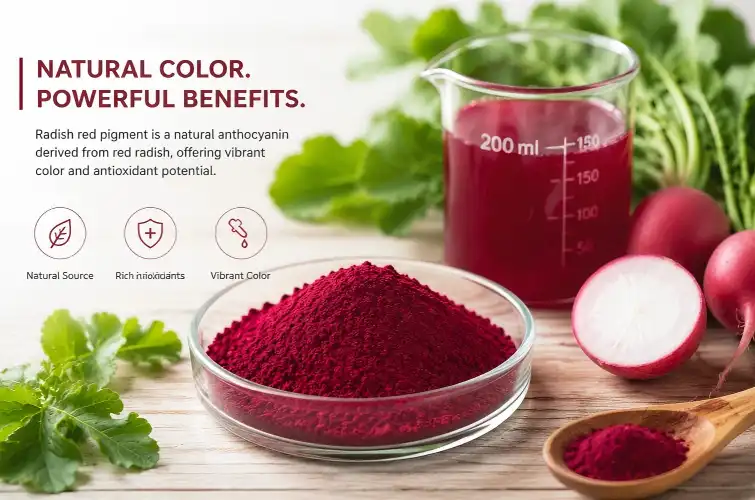
As the world moves toward "clean label" ingredients, natural colourants are at the forefront of product innovation in many fields. Using Radish Red Pigment, a bright anthocyanin-rich product from the thick roots of the red radish plant (Raphanus sativus L.), is a big step forward for companies looking for safe, environmentally friendly, and legal colouring options. This natural colourant is very stable in acidic environments and more resistant to heat than most anthocyanins from fruits. It also has a bright, appealing red colour that meets the needs of high-end B2B customers in the pharmaceutical, cosmetics, nutraceuticals, and food and beverage industries.
Understanding Radish Red Pigment: Composition, Benefits, and Uses
Chemical Composition and Extraction Process
Radish Red Pigment's main ingredient is acylated glycosides of cyanidin, and it can be as pure as 99% to 99.8% when it is processed using advanced plant extraction methods. Conditions used in the extraction process are carefully monitored to protect the integrity of these delicate anthocyanin compounds. High Performance Liquid Chromatography (HPLC) is the usual way to find substances, making sure that all production runs have the same quality and concentration. The end result is a red to dark red powder that mixes easily with water and ethanol solutions without making them cloudy, which is important for making drinks and cosmetics.
Core Functional Benefits
Arylated anthocyanins in radish extract are antioxidants that do more than just colour the radish. These chemicals actively get rid of peroxides in recipes, which lowers oxidative stress that can damage the stability and shelf life of products. This safety feature helps both the finished product and maybe even the customer, making a two-for-one deal that appeals to health-conscious markets.
Radish extract keeps the special chemicals that are found in cruciferous plants. According to research, these parts can turn on phase II detoxification enzymes, which means they can do more than just change the colour of something. This turns the colourant into an ingredient that can do more than just colour, which is good for companies that are making useful supplements and health-related items.
Stability Profile
Premium natural colourants are different from less expensive options because they work better in real-world manufacturing settings. Radish-derived anthocyanins are very stable between pH levels 2 and 4, which is a wide range that includes most acidic beverage uses, fruit preparations, and functional drink mixes. It is one of the most resistant to heat and light of all anthocyanin colours. It can survive temperatures and UV light that would break down beetroot or grape skin extracts. The bright strawberry-red colour stays the same for the normal amount of time that the product is stored, so it looks good without turning brown or fading like some natural alternatives do.
Comparing Radish Red Pigment with Other Natural and Synthetic Red Colorants
Natural Colorant Alternatives
Beetroot pigment, the most prevalent natural red colourant, has major issues. Beetroot betalains become brown at high temperatures and lose colour when exposed to acid. Radishes may be utilised in hard candies and baked products where beets can't because their anthocyanins stay red when cooked. Properly processed radish extracts don't contain beet-like earthy aromas, therefore flavour impact concerns are unfounded.
Carmine, or cochineal extract, has great pH and heat stability, but the market is becoming less open to it. Since it comes from bugs, it doesn't meet the strict vegan, vegetarian, Kosher, or Halal requirements that many global markets require. You can use Radish Red Pigment instead, which is made from plants and meets these food and religious standards while still giving the same performance. Radish-based colourants have a clear marketing advantage because people strongly prefer ingredients that come from plants.
Synthetic Dye Comparison
Synthetic colourants, such as Allura Red AC (Red 40), are very cheap and have the best tinctorial strength and pH range. But regulations around the world are making it harder to use synthetic dyes, especially in products for kids. In Europe, warning labels have been put on a lot of synthetic colours, and in North America, people are still wanting "free-from" formulations more and more. Radish Red Pigment directly addresses this legal and market trend, letting companies change the formulas of their goods to include natural options that meet changing customer needs and compliance standards.
The trade-off is that natural colours cost more for their raw materials than manufactured ones. Strategic buyers weigh this against the fact that clean-label ingredients give them more market access and the ability to charge higher prices. Products with natural colourings get a lot of attention on the shelves of high-end stores and meet the needs of health-focused brands and institutional buyers.
How to Choose and Procure High-Quality Radish Red Pigment for Your Business
Critical Quality Indicators
Controlling smells is an important quality factor that can't be changed. If the glucosinolates in raw radish aren't properly removed during cooking, they can give food a sulphurous taste. Premium grades go through resin adsorption or membrane filtration to get rid of volatile compounds. This makes organoleptically neutral pigments that can be used in applications that need to be sensitive to flavour. Before committing to big orders, ask for samples and give them a try.
Dosing needs and batch-to-batch dependability are based on colour intensity and uniformity. For Radish Red Pigment, spectrophotometry readings at the wavelengths of maximum absorbance (510–520nm) should be included with the technical specifications, and the E-values should be made clear. Colour strength differences between batches make it hard to make the right formula and waste a lot of colour. Set standards for what providers can do, and make sure that every package comes with an analytical proof.
Essential Certifications
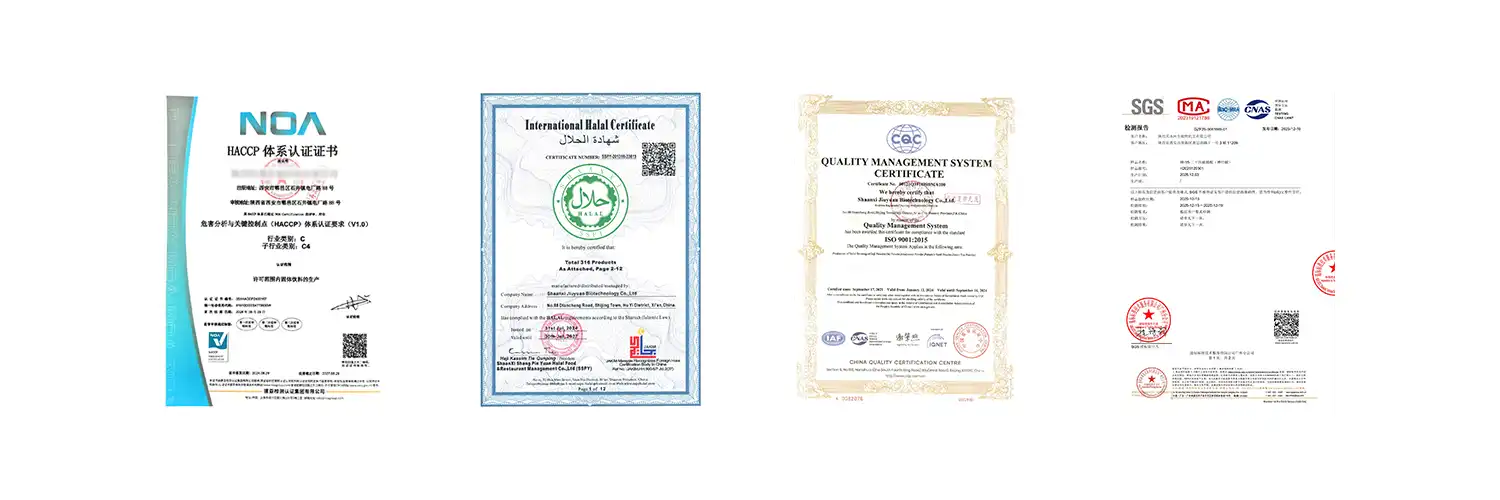
Multiple certifications demonstrate that the producer can deliver and that the product is marketable. ISO 9001 accreditation indicates a quality management system that maintains procedures and improves the system. GMP (Good Manufacturing Practices) accreditation ensures cosmetic and nutraceutical manufacturing meets pharmaceutical standards. FDA registration proves a place satisfies U.S. legal criteria, making U.S. sales simpler.
Food and religious licenses make it easier to get into new markets. When a product is certified kosher by a recognised authority, it can be used in Jewish cooking. Halal approval follows the rules of Islamic dietary law. This means that halal products can be sold in Muslim-majority markets and in general stores. When it's applicable, organic certification leads to higher prices and access to speciality retail channels.
Radish Red Pigment in Practice: Industry Use Cases and Performance Verification
Beverage Applications
When it comes to applications, radish anthocyanins are most commonly used in beverages because they work well in clear, acidic liquids. Sports drinks, enhanced waters, and functional drinks can get a bright, stable red colour that doesn't settle or haze. The colourant stays intense even after being pasteurised at temperatures that are common in making drinks. It also stays intense for a longer time in clear PET bottles.
Arylated anthocyanins are very stable in acid, which is good for carbonated soft drinks. Soda with a pH between 2.5 and 3.5 usually has the brightest strawberry-red colour that stays stable even when carbon dioxide is dissolved. Radish Red Pigment stays fully soluble, keeping its clarity and good looks, unlike some natural alternatives that solidify in carbonated systems.
Confectionery and Gel Applications
Colourants for gummy sweets and jams must be able to handle the high temperatures of making sugar mass without breaking down. Radish Red Pigment keeps its bright colour even when it is boiled and shaped, which turns beetroot brown and breaks down non-acylated anthocyanins. The products that come out of this have bright colours that consumers like and meet clean label requirements.
Radish anthocyanins work well in both pectin-based and gelatin-based formulations. The colourant spreads smoothly through gel matrices and doesn't migrate or bleed, so goods with more than one colour stay separate. Translucent gels let light through, bringing out the bright red tones and making the items look better on store shelves.
Future Trends and Opportunities in Natural Red Pigments Market
Technological Advancements
New methods for extraction and stabilisation are making pigment production, purity, and cost-effectiveness better. Techniques like membrane filtration, supercritical fluid extraction, and enzymatic processing improve the quality of colourants while having less of an effect on the environment. The price difference between natural and synthetic alternatives gets smaller as a result of these new technologies. As processing methods get better, buyers can expect better product consistency and fewer problems with formulating.
Anthocyanins can be used in neutral and alkaline pH systems thanks to microencapsulation technologies. Protective layers keep colours safe from bad conditions until they are released at the right places. This means that anthocyanin colourants can be used in dairy goods, neutral drinks, and other areas they weren't previously ideal for.
Market Growth Drivers
The trend of people wanting natural ingredients doesn't seem to be going away. Millennials and Gen Zers are especially interested in clean-label products and are willing to pay more for formulas that don't have any artificial ingredients. Because of this change in the population, many food, drink, and personal care products are being reformulated, which keeps the demand for natural colourants high.
The market for functional ingredients is growing more and more interested in multifunctional ingredients that have benefits beyond their main functions. Radish Red Pigment anthocyanins and other antioxidant-rich colourants follow this trend, which makes it possible to simplify formulations and lower overall ingredient counts. People who care about their health respond well to marketing stories that highlight functional benefits along with natural colouring. These stories also support premium positioning.
Sustainability promises from big brands and stores make it necessary to buy ingredients that come from plants and can be grown again and again. Growing radishes doesn't need as many agricultural inputs as growing some speciality crops, which helps with environmental sustainability goals. Using local and regional suppliers cuts down on the damage that transport does, which makes sustainability profiles even better.
Conclusion
Radish Red Pigment is a popular choice among consumers, meets government standards, and works well technically, making it a valuable ingredient for makers who are looking to the future. It meets important needs in the nutraceutical, food, beverage, skincare, and pharmaceutical industries with its unique mix of high stability, bright colouration, clean label credentials, and useful benefits. Synthetic colourants are facing more and more limits and customer pushback. Natural anthocyanin alternatives offer legal solutions that don't hurt product quality or appearance. People who work in procurement who build trusted relationships with suppliers of high-quality radish-based colourants gain a competitive edge in markets that are changing quickly.
FAQ
1. Can Radish Red Pigment be used in neutral pH products?
Radish Red Pigment anthocyanins work best in acidic conditions (pH 2.0 to 4.0), which is where their bright red colouration shows. As the pH level rises toward neutral, the colour changes to purple and then blue-gray, making it less useful for neutral or alkaline mixtures. Microencapsulation technologies can make things work in a wider pH range, but they work best in acidic environments. Foods and drinks that naturally fall in the right pH range include yoghurt, acidified dairy, fruit preparations, and most drinks.
2. How does shelf life compare to synthetic colorants?
Radish-based anthocyanins have a very long shelf life as long as they are made correctly, kept out of direct sunlight, and mixed in the right pH ranges. Non-acylated anthocyanins don't retain colour as well as acylated anthocyanins do, but manmade dyes usually stay stable for even longer. Adding antioxidants that work well with each other, like rosemary extract, or using UV-protective packaging can help colours last longer. Under normal storage settings, most products can stay fresh for 12 to 24 months while keeping their colour quality.
3. What certifications should I require from suppliers?
For quality assurance, you need more than one level of certification. ISO 9001 certifies quality management systems, and GMP approval verifies manufacturing practices that are safe for pharmaceuticals. FDA registration shows that you are following U.S. regulations. With Kosher and Halal licenses, you can get into more markets. Ask a third party to check the levels of heavy metals, microbiological safety, and anthocyanin content through HPLC research. When it makes sense, organic certification can help you get a higher price tag.
Partner with HERBCOSHER for Premium Radish Red Pigment Supply
HERBCOSHER offers natural colourants that are safe for use in pharmaceuticals. They have been extracting plants for over 20 years and have full international certifications. Our Radish Red Pigment anthocyanin products are 99% to 99.8% pure thanks to advanced extraction methods that have been checked by HPLC. They meet the strict requirements of food, cosmetic, and nutraceutical manufacturers around the world. With ISO9001, GMP, FDA, Kosher, and Halal standards, we make sure that all of your target areas follow the rules. Our 4,000-square-meter warehouse always has stock on hand, and bulk orders can be delivered within 15 business days. We offer OEM/ODM services that are flexible, formulations that are made just for you, and a range of packaging options, from 1 kg minimum orders to full container loads. We offer technical support for the whole process of making your product, working closely with the research teams at Northwest A&F University and Northwest University. You can email our team at info@herbcosher.com to get samples, technical details, and reasonable prices from a reliable provider that wants you to succeed.
References
1. Giusti, M.M. and Wrolstad, R.E. (2021). Anthocyanins: Characterization and Measurement with UV-Visible Spectroscopy. Current Protocols in Food Analytical Chemistry.
2. Khoo, H.E., Azlan, A., Tang, S.T. and Lim, S.M. (2017). Anthocyanidins and anthocyanins: colored pigments as food, pharmaceutical ingredients, and their health benefits. Food & Nutrition Research, 61(1), 1361779.
3. Sigurdson, G.T., Tang, P. and Giusti, M.M. (2018). Natural Colorants: Food Colorants from Natural Sources. Annual Review of Food Science and Technology, 9, 471-493.
4. Cortez, R., Luna-Vital, D.A., Margulis, D. and Gonzalez de Mejia, E. (2017). Natural Pigments: Stabilization Methods of Anthocyanins for Food Applications. Comprehensive Reviews in Food Science and Food Safety, 16(1), 180-198.
5. Rodriguez-Amaya, D.B. (2019). Natural Food Pigments and Colorants. Current Opinion in Food Science, 7, 20-26.
6. Stintzing, F.C. and Carle, R. (2004). Functional properties of anthocyanins and betalains in plants, food, and in human nutrition. Trends in Food Science & Technology, 15(1), 19-38.